October 28, 2026

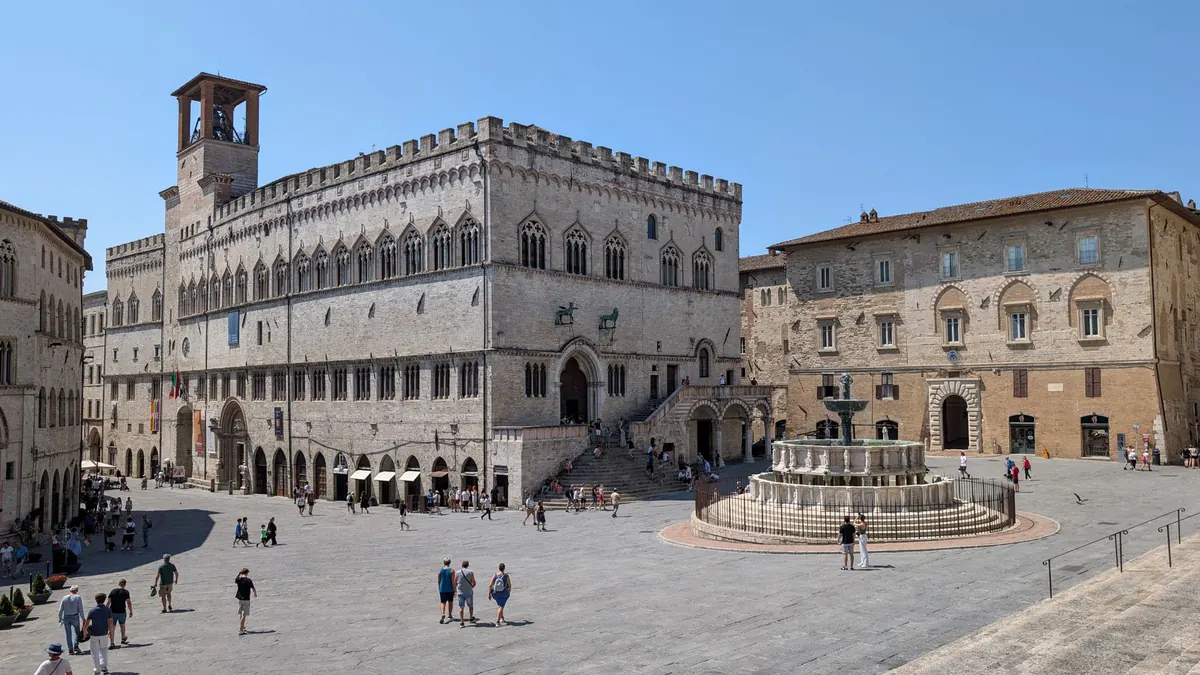
An Italian piazza in July is a postcard with a queue attached. In November, or February, or on a wet Tuesday in March, it becomes something closer to what the architects had in mind: a room without a roof, used by people who live there. The light is flat, the cafés have space at the front, and the stone takes on a colour you never see in summer. It also rains, the shutters come down at one o'clock, and a square that was charming in the sun can feel merely damp if you arrive unprepared. The fix is not a better umbrella. It is a plan.
Read the Forecast the Way Locals Do
Italian rain is often dramatic rather than persistent. A storm can empty a piazza for forty minutes and then leave the rest of the afternoon bright and rinsed. That pattern matters more than the daily icon on your phone. Look at the hourly view and the radar rather than the summary, and check it in the morning and again before you leave your room. If the rain is forecast to stop at two, plan to be in the square at half past two.
The half hour after rain is the best half hour of the day. Water sits in the shallow dips between the flagstones, the arcades drip, and everyone who had been sheltering steps out at once. If you can, walk the square twice: once in the wet, once as it dries.
Two regional notes are worth knowing. In Venice, the acqua alta that occasionally floods Piazza San Marco is tied to tides and is forecast in advance; raised walkways appear, and the experience is manageable if you check the tide times before you go rather than after. In inland towns, some squares drain badly because the paving is centuries old and slightly bowed. A square that looks merely wet can hide ankle-deep puddles along one edge. Watch where the locals step.
Build a Shelter Route Before You Leave the Hotel
The good news is that Italian piazzas are unusually well designed for bad weather, because they were designed for weather in general. Porticoes, loggias, church porches and café awnings form a broken ring around most of them. Your job is to know where the ring has gaps.
Useful shelter, roughly in order of comfort:
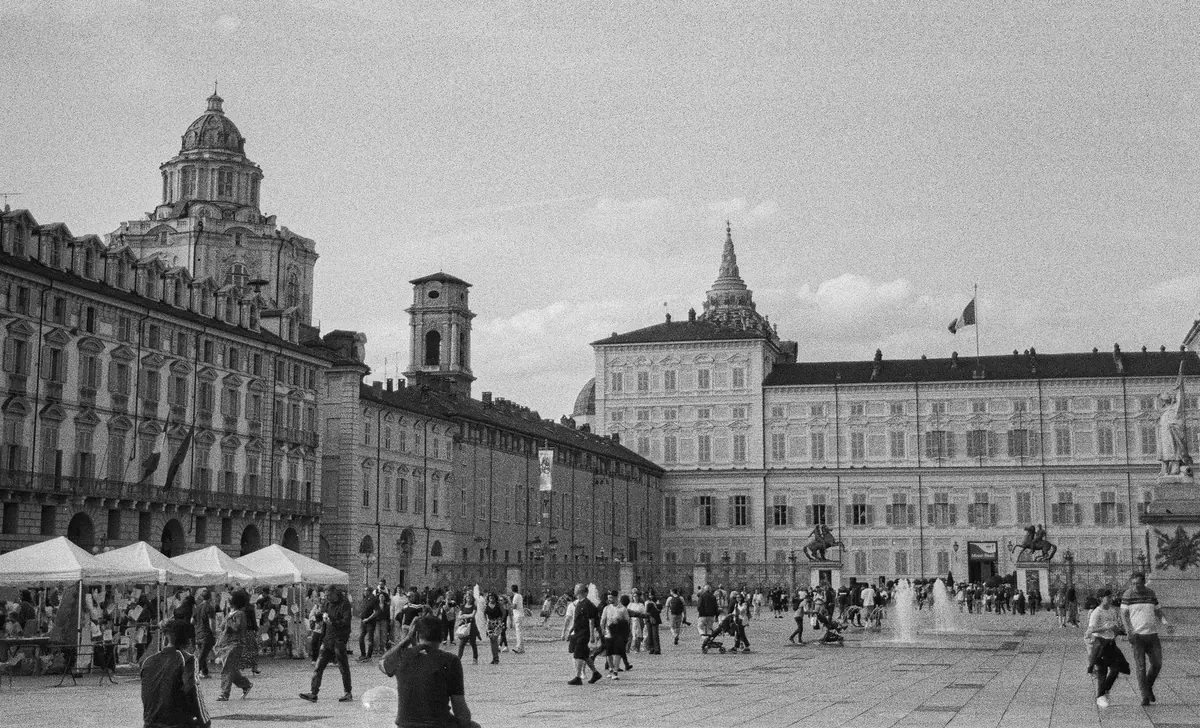
- Arcades and porticoes. Bologna's via and piazza porticoes are the gold standard; Turin's are nearly as generous. You can cross a good part of the centre without seeing open sky.
- Loggias attached to the square. Florence's Loggia dei Lanzi on Piazza della Signoria is open, covered and free — a place to stand and look at the square rather than flee it.
- Church porches and the back of a nave. Step in, be quiet, and remember that shoulders and knees should be covered; many churches keep a basket of shawls at the door.
- Café interiors and covered terraces. Sitting down costs more than standing at the bar. If you only need twenty minutes of dryness, stand.
- Galleries and passages. Milan's Galleria Vittorio Emanuele II sits off Piazza del Duomo and swallows a whole downpour.
Make it a loop, not a dash
Pick two or three sheltered points on opposite sides of the square and walk between them slowly, pausing to look back. A dash from doorway to doorway gives you nothing but wet shoes. A loop gives you the square from four angles, which is exactly what a photographer would otherwise spend an hour doing.
Time Your Visit Around the Square's Own Rhythm
Weather changes the timetable, but it does not cancel it. In most Italian towns the square has three distinct lives in a day, and the wet months sharpen the differences.
Morning, roughly until one. Markets go ahead in light rain — traders have tarpaulins and no patience for dithering. Verona's Piazza delle Erbe and Rome's Campo de' Fiori are at their most workaday and least photogenic-in-a-bad-way early on. This is the hour for produce, overheard arguments and coffee standing up.
Early afternoon. Shops close, kitchens wind down, and the square belongs to pigeons, delivery vans and the occasional tourist. If you want empty photographs of wet stone, this is your window. Many churches also close for a couple of hours around midday; check the door rather than assuming.
Late afternoon into evening. The passeggiata survives drizzle. Umbrellas come out, teenagers take up their positions, and the bars under the arcades fill. Rain is a reason to walk faster, not to stay home. If you want to feel the square rather than photograph it, come back now.
What to Carry, and What to Leave Behind
Cobblestones and polished flagstones are genuinely slippery when wet, and Italian centres are full of both. Shoes with tread matter more than any other item on this list. Beyond that:
- A compact umbrella that fits in a bag, plus a plastic bag to put it in so you do not soak your own coat.
- A light waterproof layer with a hood, for wind that turns umbrellas inside out.
- Warm layers rather than one heavy coat — arcades are draughty, cafés are warm, churches are cold.
- A cloth for your camera lens or phone screen. Grey days mean constant fine droplets.
- A small notebook or a paperback, for the twenty minutes you will spend waiting out a shower.
- Cash for the bar and the market; not every small trader takes a card in a quiet month.
Leave the heavy tripod at home and, if you can, the second pair of shoes you will resent carrying. Fewer things, drier hands.
Photography in Flat Grey Light
Overcast skies are a softbox. There are no hard shadows to lose detail in, stone reads in full, and the colours of shutters and awnings look richer than they do at noon in June. The trick is to give the picture something the grey light cannot provide: contrast, reflection and a human figure.
Wet paving doubles the square. Get low, or at least lower than eye level, and let the reflection of a lit window or a colonnade run across the bottom of the frame. Puddles between flagstones are mirrors; look for the ones that hold the whole façade. Under arcades, use the columns as a frame and let the bright open square do the work beyond them.
Shoot in the blue hour if you can. In winter it arrives early, often before five, and the moment the lamps come on above wet stone is the picture most people miss because they have gone back to the hotel to change. Keep a second cloth for the lens, wipe once rather than constantly, and avoid flash entirely — it will only bounce off the rain. If you are using a phone, tap to expose for the pale sky, then lift the exposure slightly; flat light is easy to correct afterwards.
Give Yourself a Reason to Stay
A wet piazza rewards the person who does not have an itinerary for the next forty minutes. Order a coffee, drink it standing at the bar, and watch the square from somewhere dry. Note how the arcade frames the view, which side the wind comes from, which café the locals use. This is not wasted time; it is the part of the trip you will actually remember, and it will tell you where to come back to when the rain stops.
Your Rainy-Day Piazza Checklist
- Check the hourly forecast and radar in the morning; plan around the gaps, not the whole day.
- Identify two or three sheltered points on opposite sides of the square, and walk them as a loop.
- Wear shoes with tread; carry a compact umbrella, a hooded layer and a lens cloth.
- Aim for market mornings, empty early afternoons, and the evening passeggiata whatever the sky is doing.
- Cover shoulders and knees if you plan to step into a church, and check closing times at the door.
- Photograph in the half hour after rain and again at the blue hour; get low for reflections.
- Stop for one standing coffee under the arcade and watch the square instead of crossing it.
- Come back once more before you leave — squares change character entirely between a shower and a clear evening.
Packing for wet weather is mostly a matter of accepting it. Take the slower route, keep your hands free, and let the square be a place you sit in rather than a photograph you take. Off-season, that is what it is for.
Photo: NickyPe / Pixabay