October 20, 2026
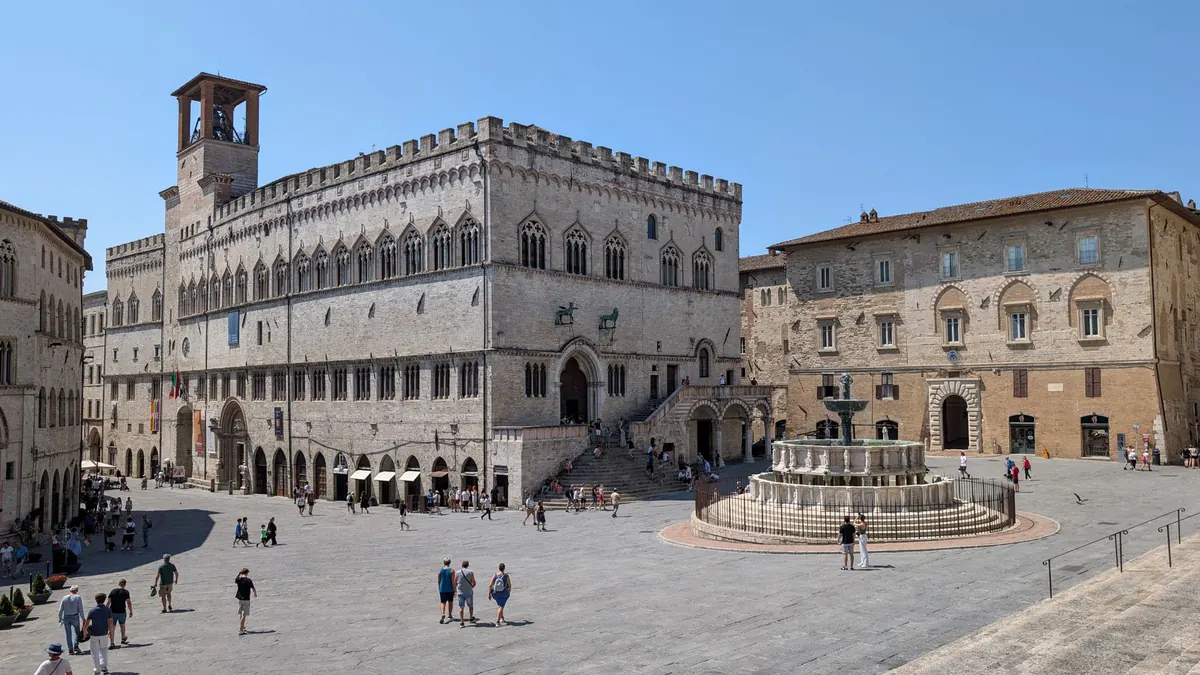
A piazza is closer to a shared living room than to a public square. People cross it on the way to work, argue about football on its benches, let their children run ahead, and stop to talk to the same neighbour they saw an hour earlier. That is precisely why small mistakes stand out here more than they would inside a museum. Nobody is going to scold you. You will simply be quietly read as someone who has not quite understood the room.
The good news is that the fixes are easy, and most of them are about awareness rather than rules. What follows are the ten habits visitors slip into most often, and what locals do instead.
1. Sitting Where You Shouldn't, and Missing Where You Can
Italian squares are full of inviting edges: church steps, the base of a monument, the rim of a fountain, the low wall around a planter. Some of these are fine to perch on for a few minutes. Others are not, and the difference is usually obvious once you look at it properly. A step beside a church door is one thing; the three steps directly in front of it, where people are trying to walk in for mass, is another.
Fountain rims are the classic trap. In some cities sitting on the edge is a normal part of the day; in others it is quietly discouraged or actively fined. Before you settle in, glance around. Are there Italians sitting there? Are there signs? If the answer is no and yes, keep walking.
The bigger mistake is the picnic. Spreading a jacket on the paving stones in the middle of the square, unpacking sandwiches and a bottle of wine at the foot of a statue, and leaving the crumbs behind reads as careless rather than romantic. If you want to eat, find a bar with a table or a bench at the edge of the square. It costs a little more and it looks entirely different.
2. Talking as if the Square Were Empty
Stone and plaster bounce sound. A phone call on speaker in a piazza carries twice as far as you expect, and a video played for a friend at full volume carries even further. The same goes for music from a portable speaker, which is the single fastest way to turn a warm square cold.
Voices at normal volume are part of the texture here. Italians are not quiet people, and a lively conversation over coffee is exactly the sound a piazza is supposed to make. The distinction is between sound that belongs to the place and sound that imposes on it. Children shouting while they chase each other: fine. Four adults on a video call at eleven at night under someone's bedroom window: not fine.
Watch the hour as well. A square that welcomes noise at seven in the evening is surrounded by people trying to sleep at midnight. If you are still out late, drop your volume a notch and move away from doorways.
3. Skipping the Greeting
This is the mistake that registers fastest, because it happens in the first ten seconds. Walking into a small bar, a bakery or a shop and launching straight into your order marks you as a foreigner more reliably than your accent ever will. The fix takes one word.
Say buongiorno when you come in, and buonasera from mid-afternoon onwards. Say grazie and arrivederci when you leave. In a lift, in a waiting room, at a market stall, a brief greeting is normal and costs nothing.
The same applies when you need help. Before asking for directions in English, open with mi scusi and a greeting. You will get a far warmer answer, partly because you bothered. Nobody expects you to speak Italian well; everybody notices when you skip the courtesy entirely.
4. Treating the Piazza as a Photo Studio
Photographing a beautiful square is not the problem. Photographing the people in it as though they were scenery is. The elderly men playing cards at their usual table, the woman hanging washing three floors up, the children kicking a ball against a wall: they live here, and they can see you pointing a lens at them.
Some practical lines to hold:
- Ask before photographing people close up, even with a gesture and a smile. A nod is enough; a refusal is also an answer, and you should accept it gracefully.
- Never photograph children you do not know. Parents will not find it charming.
- Keep group photos out of the main walking line. Step to the side, take the shot, move on.
- Leave the tripod at home for the square itself. It eats space and blocks people who are trying to get past.
- Drone use over historic squares is restricted in many Italian cities and irritates everyone below regardless. Check local rules before you even consider it.
- Inside the churches that open onto the square, look for the signs about photography and respect them without negotiation.
5. Getting the Bar Rules Backwards
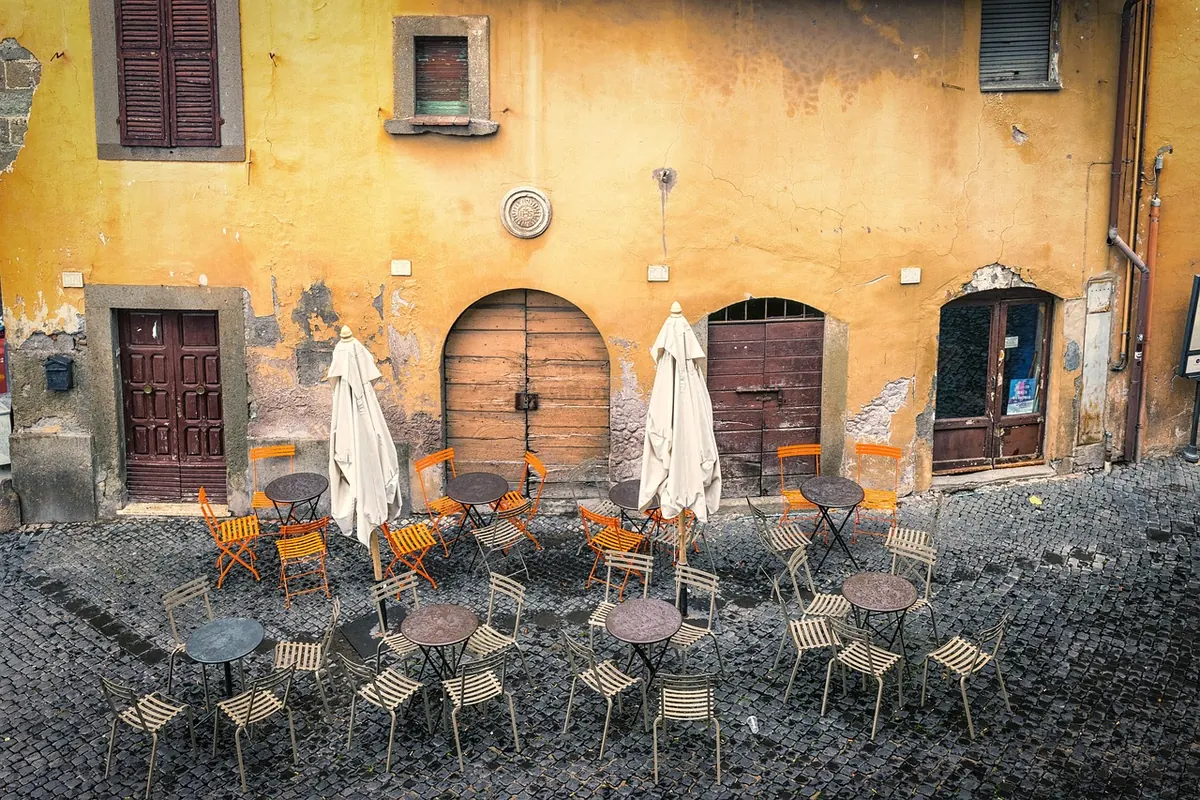
The Italian bar is a beautifully efficient machine, and it works differently depending on where you stand. Consuming at the counter is the cheap, quick option: you order, you drink your coffee standing, you pay, you leave. Sitting at a table often brings a higher price or a table-service charge, because someone is bringing the coffee to you and clearing the cup afterwards. Neither is a trick. If you want to sit, ask what the table service costs before you order, and then relax and enjoy it.
Two smaller habits worth adopting:
- Watch where you pay. Some bars want you to pay at the till first and hand the receipt to the barista; others tally everything at the end. A glance at what the person ahead of you does will tell you which.
- Do not camp at a table with a single espresso during the morning rush. Standing customers come and go in three minutes; a table is prime real estate between eight and ten.
Tipping is not obligatory and no one will chase you down the street. Rounding up, or leaving a euro or two after a proper sit-down meal, is a normal and welcome gesture.
6. Blocking the Flow at the Wrong Hour
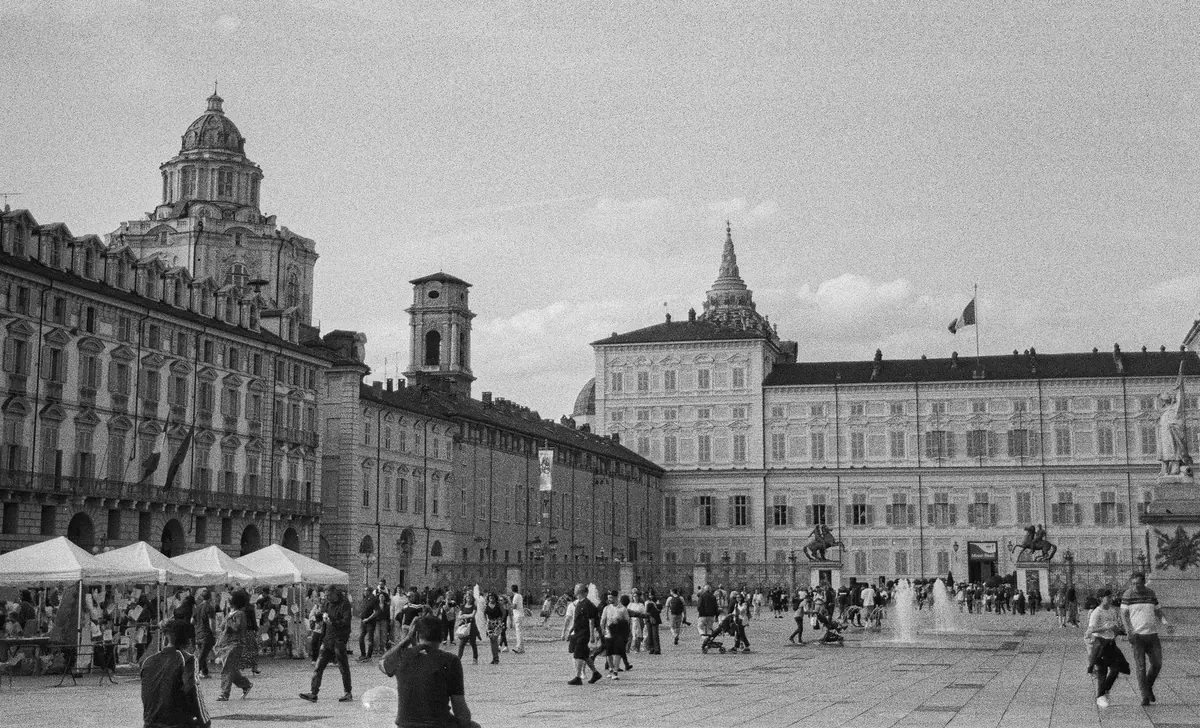
The piazza has rush hours of its own. Late afternoon and early evening bring the passeggiata, when half the town seems to circulate with no particular destination, and the square becomes a slow-moving river of people. Standing still in the middle of it, five abreast with your group, maps out and phones up, is like stopping dead at the top of an escalator.
The rule is simple: if you need to stop, consult a phone, reorganise a bag or decide where to eat, move to the edge. Against a wall, beside a column, under an arcade. The centre belongs to movement.
Early morning has its own logic. Before nine, the square belongs to deliveries, street sweepers and people on their way to work. It is a wonderful time to see the place properly, and a terrible time to spread out a map across the middle of it.
A Short Field Guide to Getting It Right
If you remember nothing else, remember these:
- Greet before you ask, thank when you leave.
- Sit where other people are sitting, and never in a doorway or a walking line.
- Keep your volume to conversation level, and your phone on silent.
- Ask before photographing people; step aside for group shots.
- Stand at the counter for a quick coffee; ask about table service if you want to sit.
- Stop at the edges, not in the middle.
None of this requires Italian or a guidebook. It requires noticing what the square is already doing and joining in rather than interrupting. Do that, and the piazza stops being a backdrop and starts being the best part of your day — the place where you sit for twenty minutes with a coffee and nothing to photograph at all.
Photo: Tama66 / Pixabay