October 16, 2026
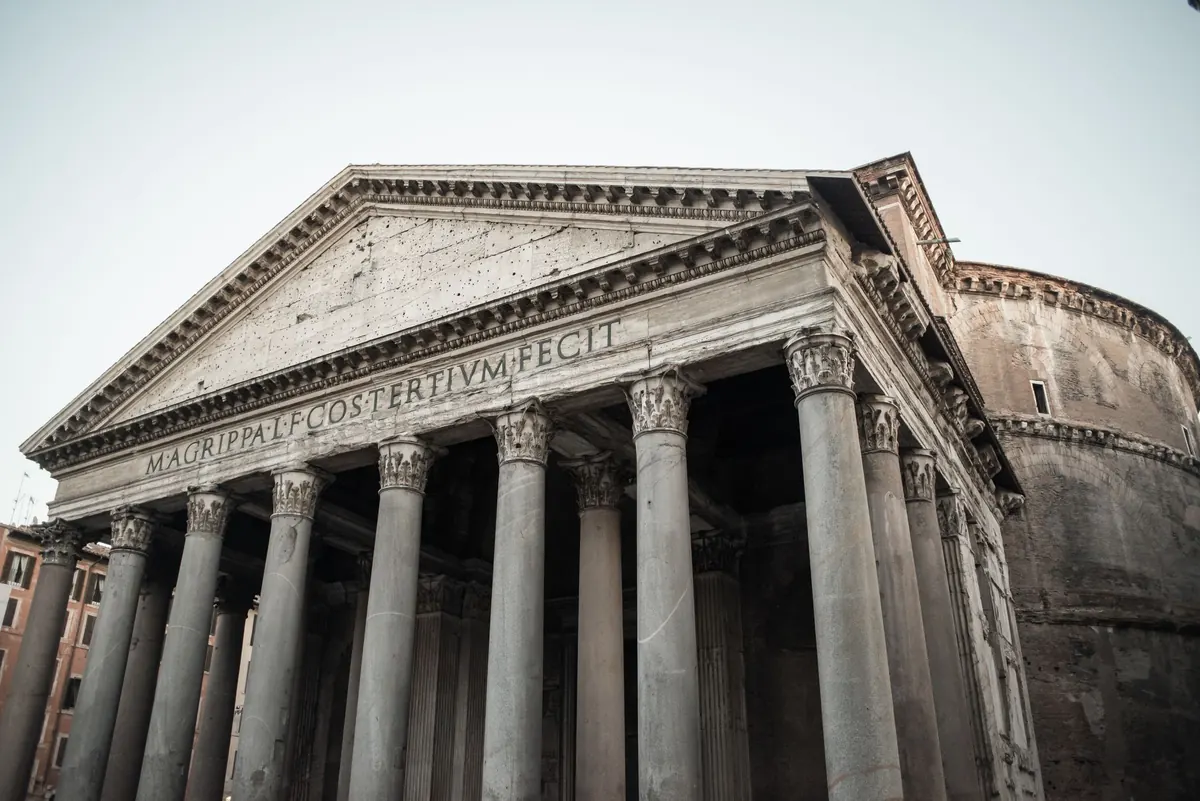
A piazza is rarely just empty space in the middle of a town. It is a room with buildings for walls, sky for a ceiling, and a floor polished by footsteps. Once you notice how that room is put together, a square stops being a backdrop for coffee and becomes one of the clearest ways to read an Italian town.
The Piazza as a Room Without a Roof
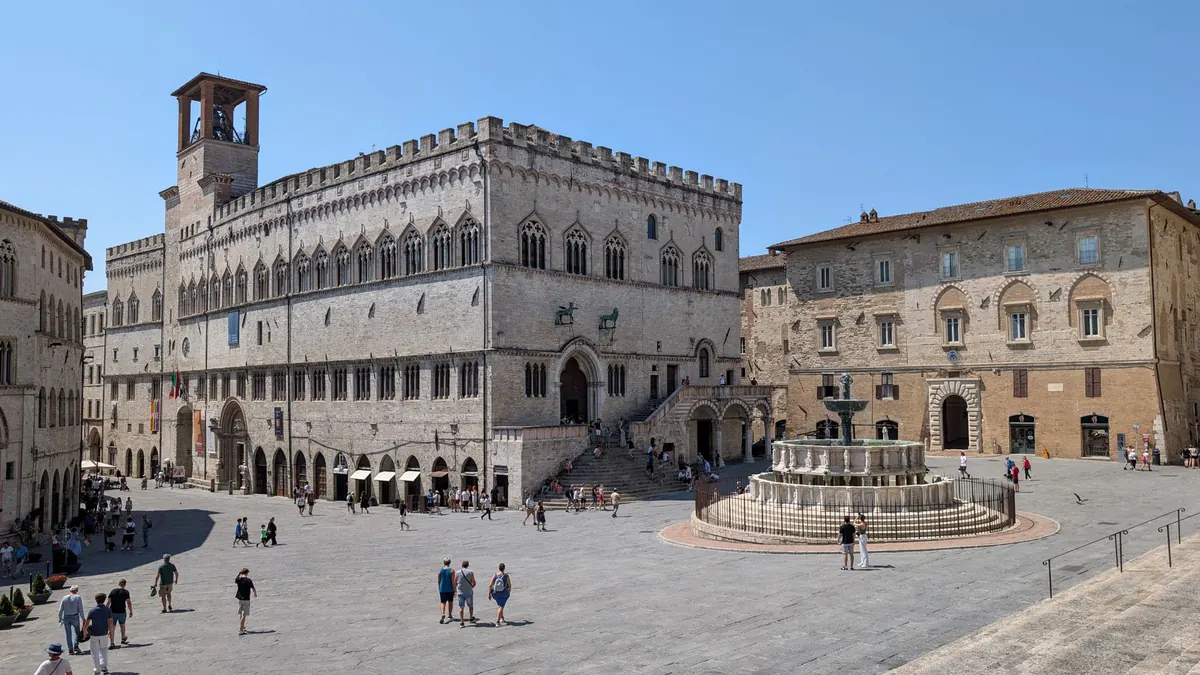
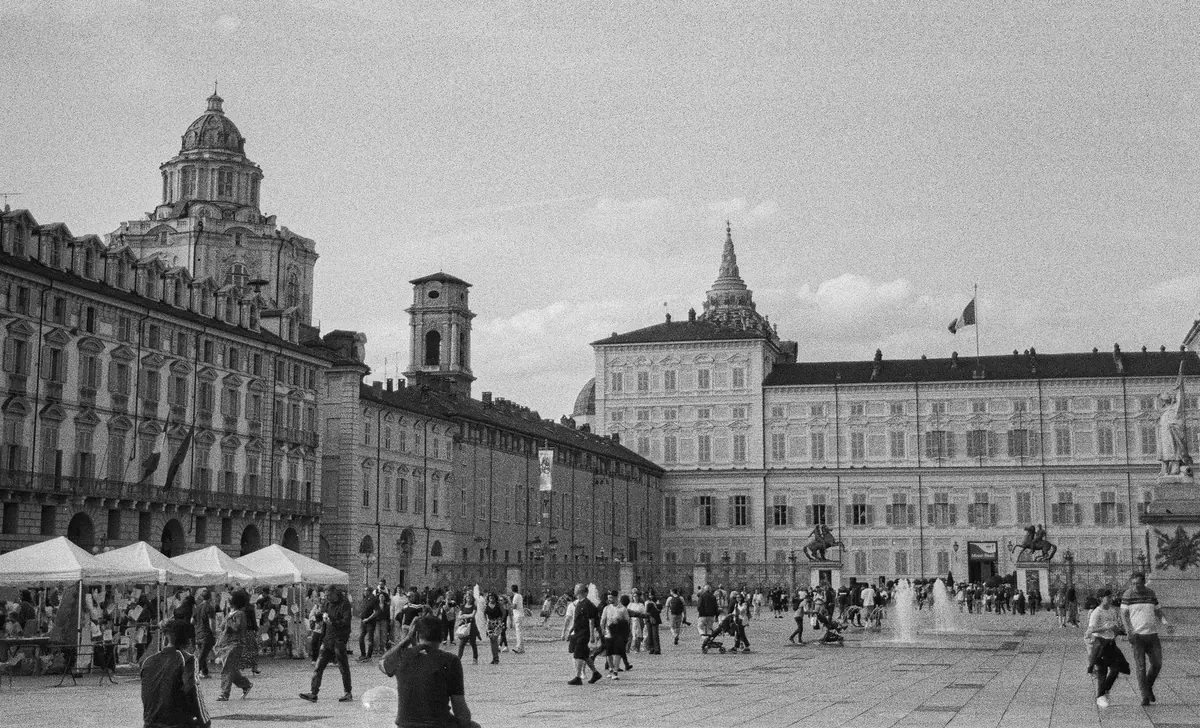
Italian squares come in many shapes: long and narrow, almost circular, steeply sloped, or wrapped tightly by buildings. What they share is a sense of enclosure. Even when a piazza opens onto a street, the surrounding facades usually frame the view and tell you where to look.
Start by finding three things: the edges, the openings, and the vertical anchor. The edges are formed by porticoes, steps, or plain walls. The openings are the streets that lead in and out. The vertical anchor is often a campanile, a dome, or a tower that rises above the roofline. Not every piazza has all three, but most have at least one feature that holds the space together.
Porticoes: The City’s Covered Living Room
A portico is a covered walkway running along the base of a building, supported by columns, piers, or arches. When several arches repeat in a row, English speakers often call it an arcade. A loggia is similar, but it usually sits higher up and opens onto the square rather than sheltering the street.
Porticoes are practical first and beautiful second. They keep rain off shoppers, shade the pavement in summer, and soften the boundary between public square and private building. Bologna is famous for its porticoes, which run for long stretches through the centre. Turin is known for arcaded streets and squares. In Rome, the colonnades around St Peter’s Square show how a covered edge can turn an enormous space into something almost welcoming.
What to notice under the arches
The pleasure of a portico is in the details at eye level. Pause and look at how it is built and used.
- The rhythm: Count the columns or arches. Are they evenly spaced, or does the pattern change as the street bends?
- The ceiling: Look up. Flat beams, vaults, frescoes, or simple plaster all change the feeling of the walkway.
- The shopfronts: A portico often holds small shops, cafés, and workshops. Notice whether the businesses spill outward or keep a quiet distance.
- The pavement: Stone slabs, cobbles, and smooth marble tell you how old the route is and how much foot traffic it has carried.
Porticoes are social architecture. They let you linger without buying anything, wait out a shower, or cross a square while staying partly hidden. When you walk under one, you are using the piazza in the way it was meant to be used.
Fountains: Water, Power, and Everyday Life
Before reliable indoor plumbing, a fountain was not decoration. It was infrastructure. A piazza fountain could supply drinking water, fill buckets, water animals, and give a neighbourhood a meeting point. That practical role explains why fountains often sit near the busiest corner of a square rather than exactly in the middle.
Look at the fountain’s position and shape. A long trough suggests animals and laundry once mattered. A deep basin with figures above it suggests civic pride and a good supply of water. Piazza Navona’s Fontana dei Quattro Fiumi is a theatrical centrepiece, while Siena’s Fonte Gaia sits at the edge of the Campo like a carved public tap. The Trevi Fountain works almost as a stage set at the end of a street, drawing people forward before they realise they have arrived.
Reading a fountain without a guidebook
Ask simple questions. Where does the water enter and leave? Are the figures calm, muscular, playful, or severe? Is there an inscription, a coat of arms, or a date? These details often reveal who paid for the fountain and what the town wanted to say about itself.
Practical note: treat fountains as monuments first. Do not wade, climb, or throw coins unless local signs invite it. If a fountain has a drinking spout and no warning sign, it is usually intended for public use; when in doubt, ask or use a marked bottle-refill point.
Campanili: The Vertical Clock and Civic Voice
A campanile is a bell tower, often standing beside a church or attached to it. The word usually refers to the tower itself rather than the bells. Before wristwatches and phones, bells marked the hours, called people to prayer, warned of fire or danger, and announced the beginning and end of the working day. A tall campanile was also a statement of confidence: the town could build high, and it wanted you to know.
Some campanili are almost separate buildings. St Mark’s Campanile in Venice stands on its own in the square, a brick shaft with a viewing platform above. Giotto’s Campanile in Florence is a slender companion to the cathedral, faced in coloured marble. Pisa’s campanile leans because of the ground beneath it, not because of a design joke. Siena’s Torre del Mangia rises from the town hall and remains one of the square’s strongest vertical anchors.
How to look at a campanile
Start at the base. Is it built into a palace, a church, or a street wall? Look at the materials: brick, stone, marble, or a mix. Find the clock, if there is one, and notice where the bells sit. The top often changes style from the shaft below, because towers were rebuilt, extended, or given new crowns over the centuries.
If you plan to climb, check access before you build it into your day. Many towers have narrow stairs, limited openings, and no lift. A quick look at the entrance will tell you whether it suits your time and comfort.
Pavements, Steps, and the Architecture of Sitting
The ground is part of the design. Stone patterns can lead your eye toward a church, a fountain, or a particular street. Raised steps around a fountain or church create a low stage and, in practice, a place to sit. Bollards, chains, and changes in paving mark boundaries between walking, trading, and lingering.
Watch how people use these edges. Some steps are clearly made for resting; others are kept clear for processions or deliveries. Follow local signs about sitting, eating, or cycling through. And look at the shadows. In a square with tall buildings, the line of shade moves across the pavement through the day and tells you where the piazza’s real social life will gather.
How to Read a Piazza in Ten Minutes
You do not need a guidebook to begin. Use this short routine in any square.
- Enter slowly and stand at the edge for a moment. Let the space settle around you.
- Look down at the pavement. Notice the pattern, the repairs, and the paths worn by feet.
- Follow one portico or arcade with your eyes. See where it begins and where it ends.
- Find the water. Is the fountain central, tucked to one side, or silent?
- Locate the campanile or the highest tower. It will tell you which building mattered most.
- Sit for two minutes. Listen to footsteps, shutters, cups, and bells.
- Read one inscription or date. It will connect the square to a specific moment in the town’s life.
Come back in the evening if you can. The same square will feel different when the porticoes are lit, the fountain is louder, and the campanile becomes a dark shape against the sky. A piazza is not a checklist of monuments. It is a piece of town life, built to be used, and the best way to understand it is to slow down and look.
Photo: ArtHouse Studio / Pexels