October 09, 2026
The first minute in an unfamiliar piazza is the most useful one. Before you order, before you commit to a chair, you have time to read the space: where the shadow will fall in half an hour, which corner the regulars have quietly claimed, whether that inviting table sits in the path of a delivery van at four o'clock. Residents do this without thinking. Visitors usually don't. What follows is the version you can run through in a single slow lap.
The Ground Beneath Your Feet
Start by looking down. Italian paving is not decoration; it is information. Small square blocks of volcanic stone — sampietrini in Rome, similar cubes elsewhere — mean uneven ground, noisy chair legs and a surface that holds a puddle in the low corner. Large smooth slabs of travertine or pale limestone usually mark the flat, level zone where cafés put their tables. Brick laid in a herringbone pattern, as in Siena, gives excellent grip but a slightly rolling surface. None of this is a problem, as long as you notice it before you sit.
Look for level changes too: a step up to a terrace, a kerb, a shallow drainage channel running across the square. A chair with one leg in a channel will wobble through your entire coffee. After rain, water runs to one side; that side dries last, and it is usually the side with the cheaper, emptier tables.
Follow the polished line
Where foot traffic has been heavy for decades, the stone turns smooth and slightly shiny. That bright path is the main walking route across the square. Sit beside it and you get the parade without the jostle. Sit directly across it and you will spend an hour shifting your chair.
Entrances and the Traffic You Cannot See
Stand still and count how people arrive. Most piazzas have one dominant mouth — a street opening, an archway, a gap under a portico — and a couple of minor ones. Picking a seat near the main entrance means constant movement beside you. Picking one on the far side means a calmer view of everyone else arriving. Neither is wrong; just choose deliberately rather than by which chair is nearest.
Then look for service traffic. Deliveries, scooters, rubbish collection and small vans reach the bars somehow, and there is usually one edge of the square that carries them. The clues are unromantic but reliable: a lowered kerb, scuff marks near a doorway, bollards that stop short, faded loading markings, a strip where the paving is patched. A terrace table on that edge is pleasant at eleven in the morning and less so when a van reverses past your elbow.
Shade, Wind and the Hour
Work out which side of the square is throwing shade and how fast that shade is travelling. A tall building, a church facade or an arcade will hold a long shadow in the morning or the afternoon depending on its position; freestanding café umbrellas cover a fraction of the terrace and are often fixed in place. The table in full shade at noon may be in full sun by one. If you plan to stay a while, ask whether the umbrella can be moved, and sit with your back to the sun rather than facing it.
Wind matters more than visitors expect. Squares that sit at the mouth of two streets funnel a breeze through them, and seaside piazzas — Trieste's open square facing the water is the obvious example — can be genuinely brisk. Porticoes and arcades are the traditional windbreak, which is one reason the tables underneath them fill first. Fountain spray drifts further than it looks on a breezy day, too.
The Focal Point and the Shape of the Room
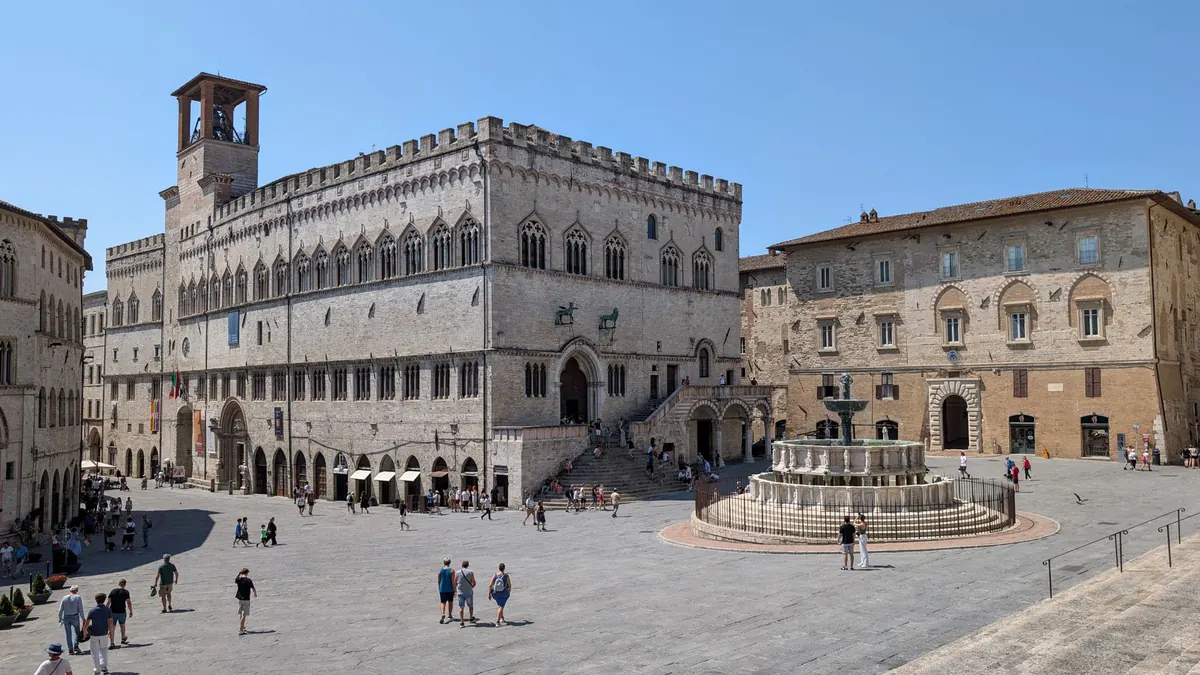
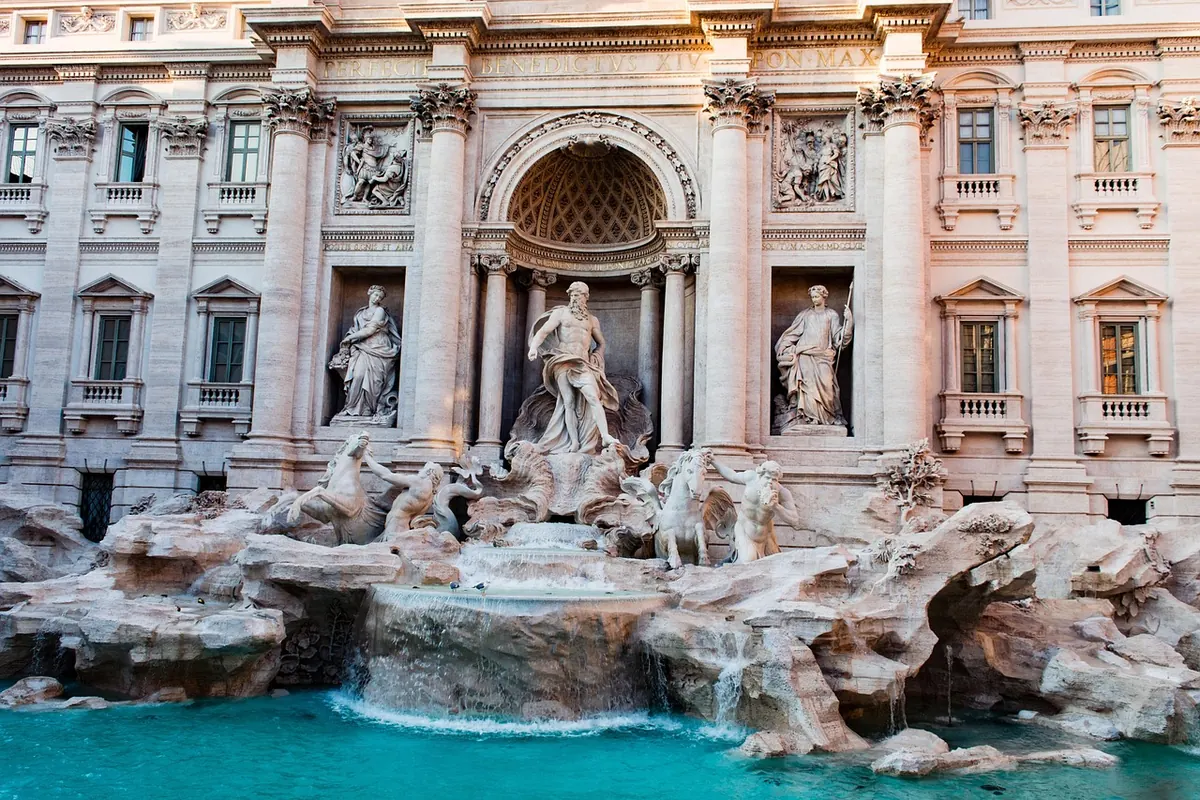
Every piazza has a centre of gravity: a fountain, an obelisk, a statue on a plinth, a cathedral front, an opening between buildings that frames a view. Decide whether you want to look at it or to watch other people looking at it. The side-on view is usually the better one; sitting dead centre in front of a monument puts you in the middle of the photo-taking traffic.
Notice the shape as well. Very few piazzas are true squares. Some are shells, some trapezoids, some long rectangles that behave like corridors. That geometry decides where the crowd pools — usually the narrow end — and where the quieter seats sit, which is often the wide end. Steps, plinths and low walls are free public seating, and frequently the best seat in the house.
Social Clues: Read the Room Before You Choose a Chair
Now look at people rather than stone. Certain benches belong to the same group of older men every morning; the shaded steps change hands between schoolchildren and couples as the afternoon goes on; the arcade bench is for anyone who wants to be out of the sun but still part of the conversation. None of this is written down, and none of it is hostile — it is simply worth knowing which seats come with company.
Listen, too. The espresso machine end of a terrace is loud; the far end of the same terrace is quiet. A bus stop on one side changes the noise entirely. And watch the clock: the passeggiata hour transforms a sleepy square into a theatre, then empties it again by dinner. The piazza you liked at three in the afternoon may be a different room at seven.
The Twelve-Point Checklist
- Surface. Smooth slabs, cobbles or brick — and is your chair going to sit flat?
- Level changes. Steps, kerbs and drainage channels under the table legs.
- The polished line. Find the main walking route and sit beside it, not across it.
- Slope. A gentle tilt is charming until your glass starts to slide.
- Arrival side. Which entrance brings most of the foot traffic?
- Service route. The edge with the lowered kerb and the scuffed paving.
- Current shade. And where it will be in forty minutes.
- Wind. Funnels between streets; arcades as shelter; fountain spray.
- Focal point. What you will be looking at for the next hour.
- Seating geometry. Terrace, steps, plinth, arcade bench — pick a type, not just a chair.
- Sound zones. Coffee machine, bus stop, buskers, fountain.
- Local rhythm. Who is already sitting here, and when do they leave?
Sitting Down: The Practical Bits
Once you have chosen, commit properly. If you take a table on a café terrace, you are renting the chair with an order — a coffee, a drink, something small is enough, but nursing an empty table for an hour is poor form. Menus are displayed outside by law, so read one before you sit: cover charges, service and any terrace supplement should be printed there. If a price isn't listed, ask before ordering rather than after.
Keep the walkway clear. Chairs drift outward as people get comfortable, and the polished line you noticed earlier is exactly where a waiter with a tray, a parent with a pram or a scooter will need to pass. In busy squares, keep bags on your lap or under your foot rather than hooked over the chair back. And give yourself the last five minutes: sit still, stop checking your phone, and let the square do what it does. The reason to read a piazza carefully is not caution. It is so that the hour you spend in it is the hour you actually wanted.
Photo: marcococciatelli / Pixabay